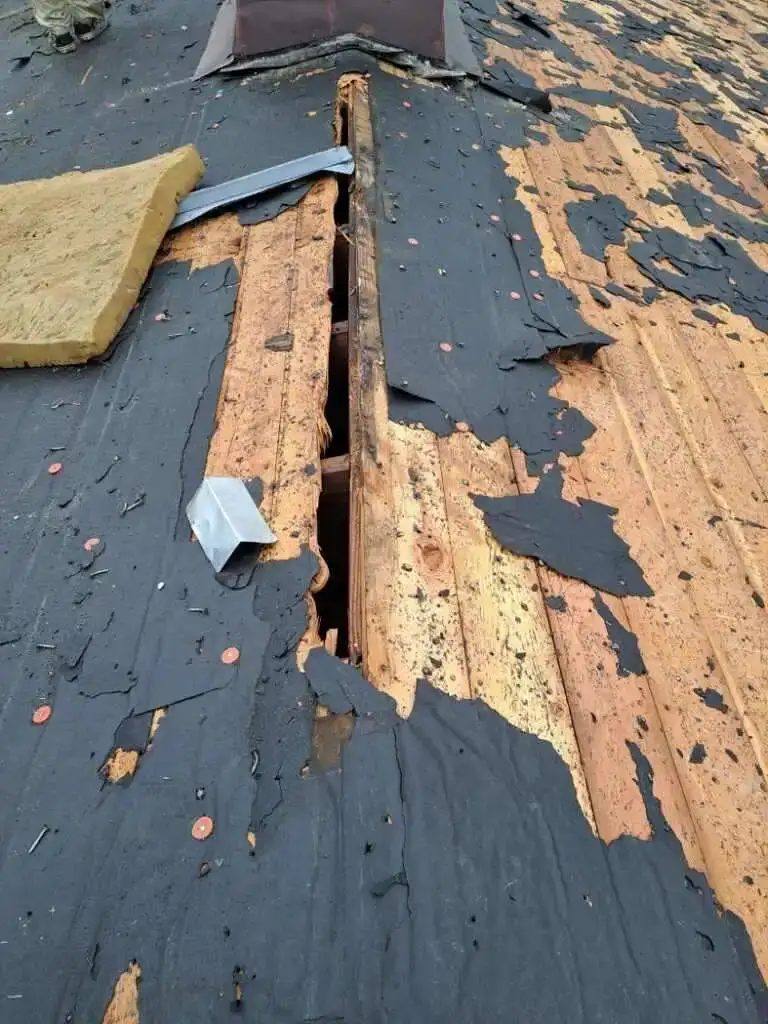
Carriers do not deny claims because they dislike you. They deny claims because the file is thin. If nobody can show the roof was in good condition before the storm, and nobody can tie the damage to a specific dated weather event, the adjuster has an easy decision to make.
Everything below exists to take that easy decision away.
Build The Record Before You Need It
The strongest claim file starts before the storm. A dated condition report with photos, a moisture survey, and a maintenance log tell the carrier that the roof was performing until something hit it.
After The Event
Once the weather clears, work in this order:
- Stop the active water. Temporary dry-in protects the building and shows the carrier you mitigated.
- Photograph everything with date stamps, wide shots for context and close shots for detail.
- Pull the weather data for your address, hail size, wind speed, and the date of record.
- Get an infrared moisture survey so saturated insulation is mapped, not guessed at.
- Have a licensed contractor write a line item scope tied to current code and manufacturer requirements.
- Keep every invoice, including the emergency work.
Where Owners Lose Money
Two places. First, accepting a repair scope when the membrane is at the end of its service life and code requires more. Second, forgetting code upgrade coverage. New Jersey energy code often requires added insulation on a tear off, and that cost is frequently recoverable if somebody asks for it.
We attend adjuster meetings with our own documentation in hand. It is a shorter conversation that way. Reach us at (862) 329-4766.